Linux VPS hosting built for control and reliability

Linux runs a huge share of the internet, because it's stable, secure, and flexible. Our Linux VPS plans give you that same control, with a wide range of distributions, resources tailored to your exact specs, and root access to set things up your way. Whether you're deploying a personal project, running a business application, or just want a server you can tinker with, you get the resources and freedom to build without fighting the platform.

Run a personal blog, host a client's site, or spin up a test environment for your next project. A Linux VPS gives you the room to experiment and the stability to keep things running once you're live, without needing to manage physical hardware or share resources with anyone else.


Get Started with 30-Day Trial & $100 Bonus

Enjoy the Linux Operating Systems
Deployment models

Flexible billing system

Users can select between monthly or hourly billing plans, so you pay only for the server time that you use.

Uptime guarantee

24/7 Tech support

We ensure your server remains online 24/7 without downtime issues. Our trained customer support team is available at all times.

Flexible billing

DDoS protection

Your Linux VPS includes built-in security features that analyze data in real-time and prevent access to Distributed Denial of Service bots.

Realtime server activation

Fast firewall configuration

Easily configure, set up, and manage your firewall with your own rules in our console to add a layer of protection between your server and incoming traffic.

24/7 online

Live backup

Automated backups of your entire Linux VPS environment along with disaster recovery services ensure you never lose your setup or historical data.

Secure setup

Instant deployment

Create your server with a few clicks to choose location and resources. You’ll be surprised how quick and easy it is on our intuitive console.

Firewall setup

Full root access

You get the highest level of administrative control so you can perform a wide range of tasks, from system configuration to managing SSH access.

Fast memory and technology

SSD storage

Our NVMe SSD VPS technology provides lightning-fast read and write speeds, allowing your data to load quickly and smoothly.

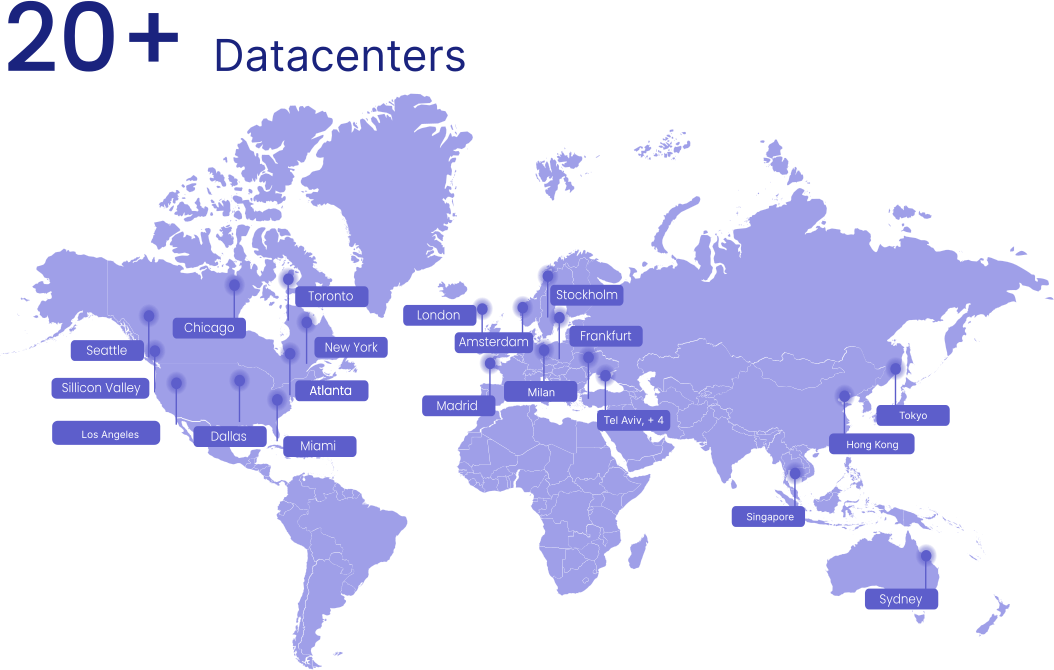
20+ locations worldwide for your application

Rocky Linux

Ubuntu

Debian

CentOS

Rocky Linux

Rocky LinuxRocky Linux picked up where CentOS left off. When CentOS shifted its focus away from being a stable, free RHEL clone, Rocky Linux stepped in as the direct continuation, built by many of the same people, with full binary compatibility with Red Hat Enterprise Linux.

Rocky Linux's conservative approach to updates and long-term support cycles make it the ideal choice for production environments where stability is paramount. With its robust security framework and extensive package ecosystem, your applications will run smoothly and securely from day one.

That compatibility is the main draw. If you're running RHEL in production and want something free for testing, staging, or smaller deployments, Rocky Linux behaves the same way. It sticks to a conservative update schedule and long-term support cycles, so you're not dealing with surprise changes in a production environment.

It's open source, so you're not locked into a vendor's licensing terms, and it uses the same package management and SELinux setup as RHEL, which most sysadmins are already familiar with. If your team already knows how to manage a RHEL system, there's not much of a learning curve here.

Ubuntu

Ubuntu serverUbuntu is probably the most familiar Linux distribution for VPS hosting, and for good reason: it's easy to work with, has a large community behind it, and performs reliably. Canonical maintains it on a predictable schedule, with Long Term Support (LTS) releases for production environments that need stability, and regular releases if you want newer software sooner. That gives you a choice depending on whether you prioritize stability or staying current.

Ubuntu uses APT (Advanced Package Tool) for package management, which makes installing, removing, and updating software straightforward. You can get a web server like Apache or NGINX running, set up a database like MySQL or PostgreSQL, or install a runtime like Python, PHP, or Node.js, all with a few commands.

Debian

Debian serverDebian is one of the oldest and most stable Linux distributions around, and it's what Ubuntu itself is built on. Packages go through a thorough testing process before release, so you're less likely to run into unexpected breakage, which is why it's a common pick for production servers that need to just keep running.

It has a large community behind it, so documentation and support are easy to find whether you're new to server management or not. Debian also sticks to free, open-source software by default, without bundling in proprietary extras.

Like Ubuntu, it uses APT for package management, so installing and maintaining things like Apache, NGINX, MySQL, PostgreSQL, or your language runtime of choice is quick. Debian also has a light resource footprint, so it runs well even on smaller VPS specs, which makes it a solid option for anything from a personal project to a production application.

CentOS

CentOS

Rocky Linux picked up where CentOS left off. When CentOS shifted away from being a stable, free RHEL clone, Rocky Linux stepped in as the direct continuation, built by many of the same people, with full binary compatibility with Red Hat Enterprise Linux.

That compatibility is the main draw. If your team runs RHEL in production and wants something free for testing, staging, or smaller deployments, Rocky Linux behaves the same way. It follows a conservative update schedule and long-term support cycles, so you're not dealing with surprise changes in a production environment.

It's open source, so you're not locked into a vendor's licensing terms, and it uses the same package management and SELinux setup as RHEL, which most sysadmins already know. Installing and maintaining things like Apache, NGINX, MySQL, or PostgreSQL works the same way it would on RHEL itself.

Frequently Asked Questions

What is a Linux VPS?

A Linux VPS (Virtual Private Server) is a virtual server that runs on a Linux operating system and is hosted on a server in the cloud.

Linux VPS hosting is a digital hosting solution for Linux operating systems with dedicated memory, CPU cores, and space for a single user, allowing users to benefit from the robust and reliable environment of a dedicated server without the higher cost.

Linux VPS hosting is particularly suitable for websites with high traffic. With our Linux VPS hosting system, you can choose from a variety of operating systems and distributions: Debian, CentOS, AlmaLinux, Rocky Linux, FreeBSD, and many more.

What is VPS hosting?

VPS, short for virtual private server, acts like an isolated, virtual environment over a physical server. It uses virtualization technology to split the single physical machine into multiple private servers for sharing resources. This way, a single user gets their setup to run their website.

How secure is a Linux VPS?

We keep our cloud servers up-to-date with the latest security patches and updates to mitigate known vulnerabilities. We also offer features like disaster recovery services and DDoS protection to safeguard your server against denial-of-service attacks.

What Linux-based operating systems do you offer?

You can install any of the following operating systems or bring your own license or custom operating system:

  1. AlmaLinux
  2. CentOS
  3. CloudLinux
  4. Debian
  5. FreeBSD
  6. Gentoo Linux
  7. Rocky Linux
  8. Ubuntu
  9. Linux Mint

What type of support is available for my Linux VPS?

You can contact our support team for assistance with any queries or technical issues. Our experienced team of experts can help you with anything from basic server configuration to complex troubleshooting.

In which locations are VPS servers available?

VPSserver.com maintains over 20 globally distributed data centers, strategically located across North America, Europe, the Middle East, and the Asia-Pacific region. See our updated list of locations.

Can I upgrade my Linux VPS?

Yes, you can easily upgrade or downgrade your plan at any time.

What's included in the free trial?

We offer a 30-day free trial with up to $100 in service credits. During this period, you can deploy a free VPS server, choose your preferred operating system, and select one of our 20+ global data center locations.

When will I be charged?

If you select monthly billing and don't cancel during the trial, billing works as follows: Starting your trial on July 20 means your server runs free until August 20. Your first invoice arrives after September 1 and covers two charges: the prorated period from August 20-31 plus the full month of September.

What payment options do you accept?

We accept credit/debit cards issued by your local bank branch with a cardholder’s name. We also accept payments through PayPal. We do not accept virtual, prepaid, or electronic cards.

Server locations

Why choose VPSServer for your Linux VPS hosting?

Choosing Linux VPS from VPSserver.com means unmatched performance, with lightning-fast speeds and low latency, thanks to our enterprise-grade infrastructure, including NVMe SSD storage optimized for Linux environments.

You'll gain complete control over your server with full root access, allowing you to install any software, configure settings, and customize your environment to your exact specifications. Our robust security measures combine the inherent security of Linux with advanced network protection, including DDoS protection, firewall management, and automated security updates keep your server protected 24/7.

Scalability is on demand, enabling you to easily upgrade or downgrade your CPU, RAM, and storage resources in minutes as your needs evolve, ensuring your projects always have the power they require.

We offer cost-effective solutions, so you get premium performance and features without the premium price tag. Our flexible billing options mean you only pay for the resources you use.

With our global data centers, you can choose from a wide array of server locations worldwide to ensure the lowest latency for your users, no matter where they are.

Finally, our 24/7 expert support means our team of Linux specialists is available around the clock to provide technical assistance and ensure your server runs smoothly.